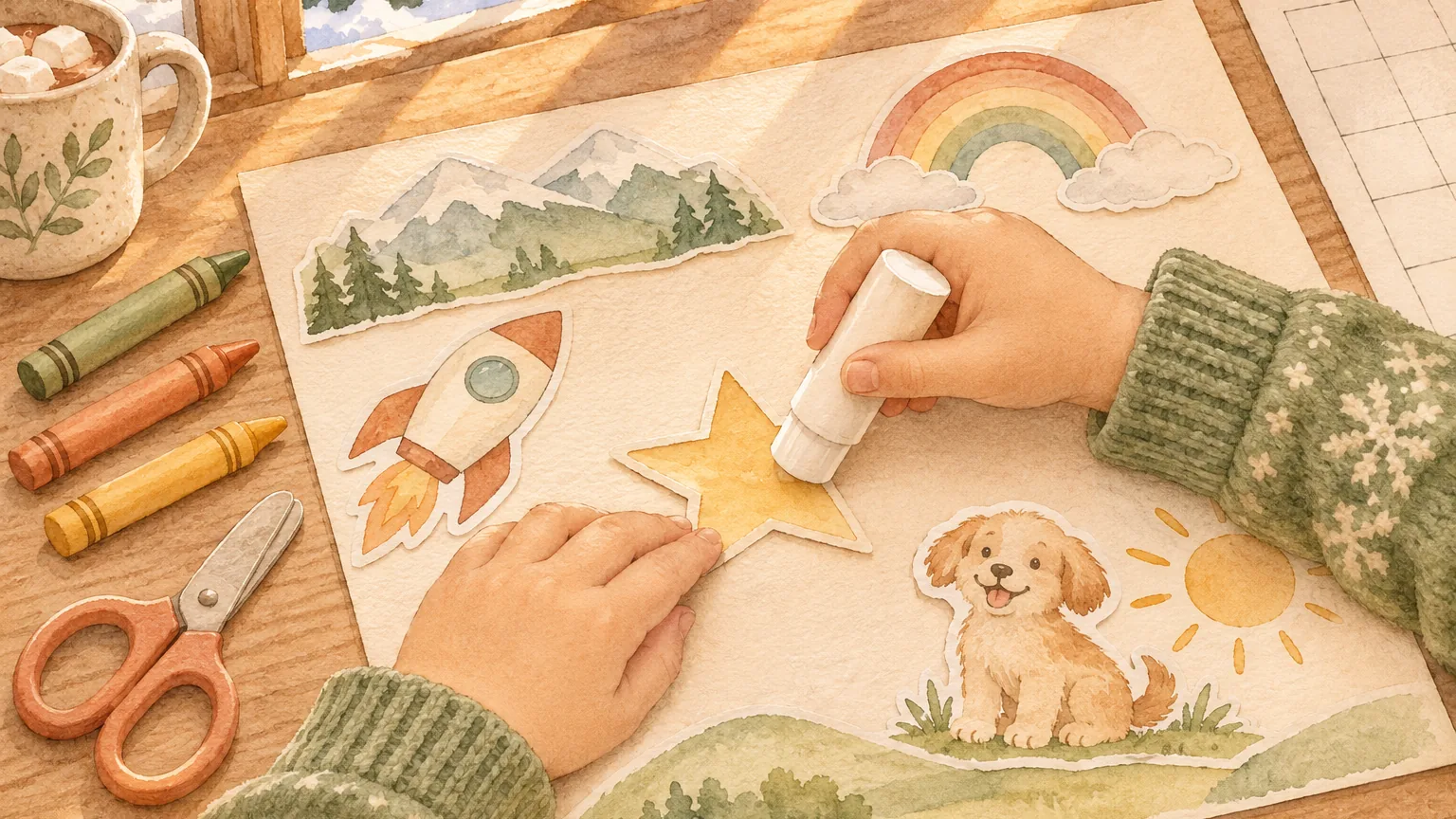
Last winter break my niece watched me cut pictures out of an old travel magazine for my own board and asked if she could make one. Twenty minutes later she had glued a horse, a pizza and a picture of the moon to a sheet of paper and declared it finished. It was sweet, but when I asked what the moon was for, she shrugged. She’d picked whatever looked nice.

So this year I went looking for a vision board for kids that starts with questions instead of scissors. I compared the printables I could find, and this is the one I found first. It stopped me because it breaks the board into small themed pages, like “My Big Dreams”, “Friendship Goals” and “Places I Want to Visit”, so a child thinks about each dream before gluing it.
01 / Best overall
Vision Board Workbook for Kids
Designed by Mahira Pro.
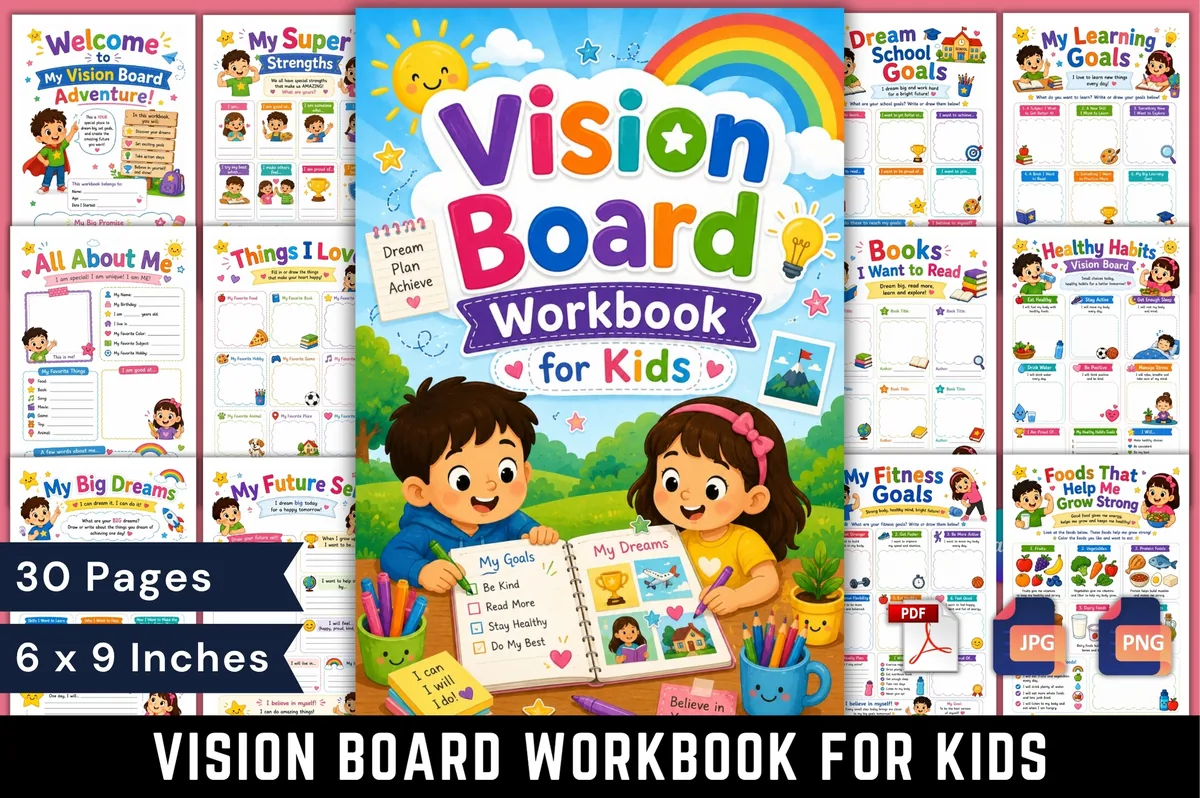 Best for ages 6 to 12
- 6 x 9 in
- 30 pages
What’s insideA 30-page full-color vision board workbook for ages 6 to 12, with pages such as All About Me, My Super Strengths, My Big Dreams, My Future Self, Books I Want to Read, Healthy Habits Vision Board, Friendship Goals, Ways I Can Be Kind, Family Happiness Board, Places I Want to Visit, My Dream Day, Monthly Goals Planner, My Success Steps and a Believe in Yourself Board, plus a certificate. Printable PDF, 6 x 9 in.
- Ages 6 to 12
- Themed mini boards
- Monthly goals page
- Certificate
Why I picked it
It turns one big board into small themed boards a child can finish in one sitting: school, friends, family, places, habits. The “My Success Steps” page adds the plan that a collage alone doesn’t have.
Keep in mind: it’s 6 x 9 in, a book-interior size, so pages print small on Letter paper.
Not every child wants a workbook, though. Little ones need a few big “I am” words, tweens want something that doesn’t look babyish, and some kids just want to color. Below is how I’d run the afternoon with a child, ideas by age, and then my five other finds. For grown-up boards, see our vision board printables.
What a Vision Board for Kids Is
A vision board for kids is a collage of pictures and words for the things a child hopes for: dreams, goals, people and things that matter to them. Big Life Journal calls theirs a “Big Life Board”, and a school guide from Greensprings describes it as words and images for what a child hopes to achieve in a set time.
For a child, the point isn’t manifesting. It’s practice at noticing what they care about, saying it out loud and taking one small step toward it.
Questions to Ask Before You Glue
Big Life Journal suggests talking about goals and dreams before anyone picks up scissors, and sharing yours too. These are the questions I’d ask, a few at a time:
- What’s something you’d love to learn this year?
- Where would you like to go, even just once?
- What’s a book, game or sport you want to try?
- Who do you want to spend more time with?
- What’s one kind thing you’d like to do for someone?
- What makes you proud of yourself?
- What’s something a bit scary you’d like to be brave about?
Write the answers down as they come. Those words become the board.
How to Make a Vision Board With Your Child
- Talk first. Use the questions above for ten minutes, and let your child do most of the talking.
- Pick three to six dreams. Fewer is better for young kids; a board with forty pictures is just a collage.
- Find a picture and a word for each. Cut from magazines, draw, or print pictures; add a short “I am” or “I can” card next to each one.
- Glue it together. Poster board, a corkboard or a single page from a workbook all work. Let them place things, even if it’s lopsided.
- Add one small step. Next to one dream, write one thing to do this week (“read one chapter”, “practice ten kicks”). Thinking about what might get in the way and planning around it helps more than picturing the dream alone; the research is in our 2027 vision board guide.
- Hang it where they’ll see it. Big Life Journal’s last step is to display the board and keep it alive. Their bedroom door, the fridge or above the desk all work.
This works best from about age four with help. Toddlers enjoy the gluing but not the planning, so for them a simple sticker page is enough.
Vision Board Ideas for Kids by Age
Preschool (about 3 to 5)
Keep it to pictures and one-word ideas: a favorite animal, a place to visit, a friend’s name, “brave”, “kind”. Big “I am” cards like the Kids Zone set read easily, and a self-portrait in the middle makes it theirs.
Early grades (about 6 to 9)
Add school and skill dreams: reading a chapter book, learning to swim, a science fair, making a new friend. Themed mini boards from the Mahira Pro workbook work well here, one theme per afternoon.
Tweens (about 10 to 12)
Let them lead. Hobbies, sports teams, a dream job, a room makeover, a trip, a skill like baking or coding. Confidence cards like the Youssef Artist set fit better than cartoon “I am happy” cards at this age.
What to Put on a Kid’s Vision Board
- A book they want to read.
- A skill to learn (swimming, a cartwheel, knitting).
- A place to visit, near or far.
- A family adventure, like camping or a museum day.
- A kindness goal, like helping a neighbor.
- A friend they want to see more.
- A school goal in their own words.
- A healthy habit, like more fruit or earlier bedtime.
- Something they made and are proud of.
- Their own drawing or photo in the middle.
- Two or three “I am” or “I can” words.
- One brave thing to try this year.
For printable pictures and words ready to cut, our vision board picture printables and vision board words posts have more, mostly aimed at adults but easy to sort for kids.
The 6 Best Vision Board Printables for Kids I Found
Ready-made kids’ vision board kits are rare on Creative Fabrica, and the two I liked are already in our main vision board post and our vision board templates post. So this list mixes vision board workbooks with affirmation cards and coloring pages a child can put on the board. I skipped Canva KDP bundles, posters sold as commercial clipart and anything already in our affirmation card printables roundup, with one product per designer.
In short: the Mahira Pro workbook for guided themed boards, the Kids Zone cards for little ones, and the 50 color-block cards if you want lots of words to choose from.
Find your favorite
Quick Picks
Choose a printable to jump to its review.
- 01Best overallVision Board Workbook for Kids
- 02Best workbookJunior Dream Builder for Kids
- 03Best for little kidsPrintable Affirmation Cards for Kids
- 04Best for tweensSelf-Esteem & Confidence Cards for Kids
- 05Best coloringAffirmation Coloring Pages for Kids
- 06Best valuePrintable Kids Positive Affirmation Card
How I chose. In order of weight: made for kids, with an age range where the listing gives one; pages or words a child can actually put on a board; stated sizes and file types; easy to print at home; and pictures or words a child can read on their own. Everything below comes from each product’s page on Creative Fabrica, checked on November 27, 2026. I haven’t printed these myself, so I describe what each designer lists and shows.
02 / Best workbook
Junior Dream Builder for Kids
Designed by designmela01.
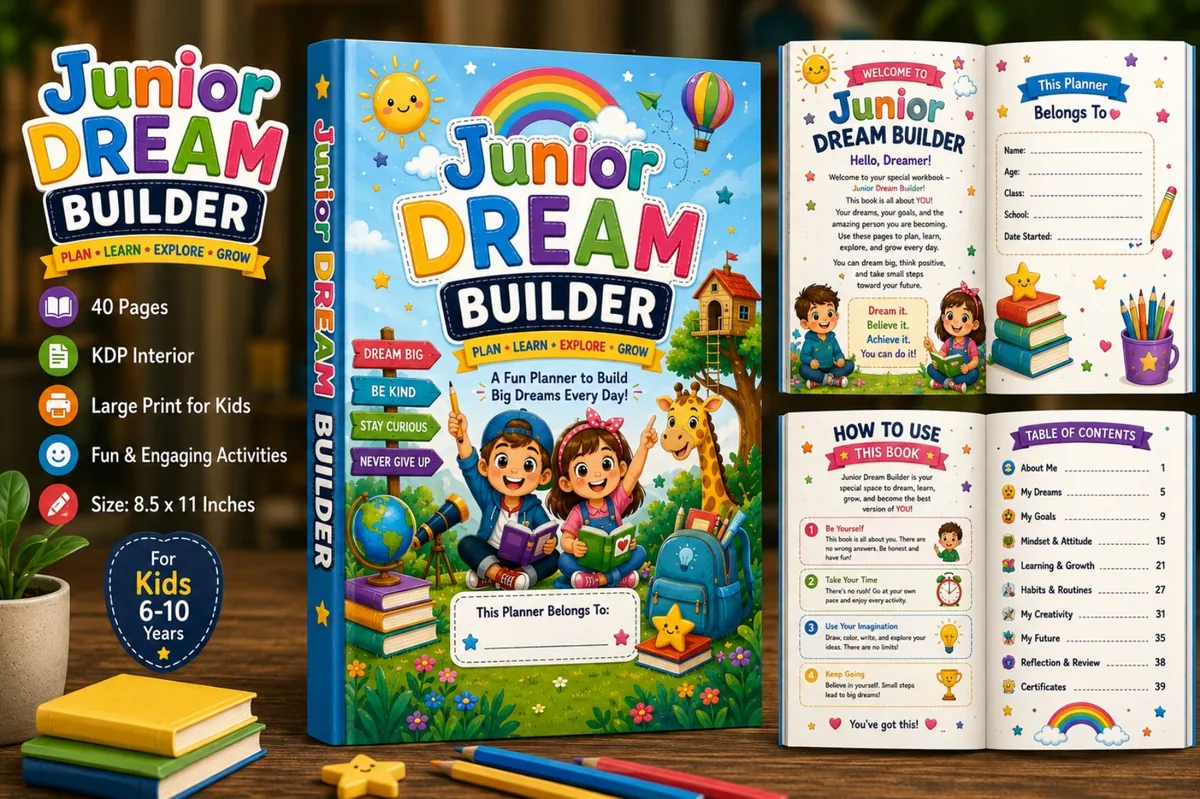 Best for a full goal workbook
- 8.5 x 11 in
- 40 pages
What’s insideA 40-page kids’ workbook on 8.5 x 11 in with goal-setting activities, weekly goals and achievement trackers, positive affirmations, confidence and growth mindset pages, feelings check-ins, calm breathing, gratitude and kindness activities, creative drawing and vision board pages, puzzles and mazes and a certificate of achievement. The cover says ages 6 to 10.
- Letter-size pages
- Vision board pages
- Weekly goal trackers
- Puzzles + mazes
Why I picked it
Letter-size pages give small hands room to draw, and the weekly goal trackers keep the board’s dreams moving after the craft day. Puzzles and mazes make it feel like a fun book, not homework.
Keep in mind: the cover calls it a KDP interior, and only some of the 40 pages are vision board pages.
03 / Best for little kids
Printable Affirmation Cards for Kids
Designed by Kids Zone.
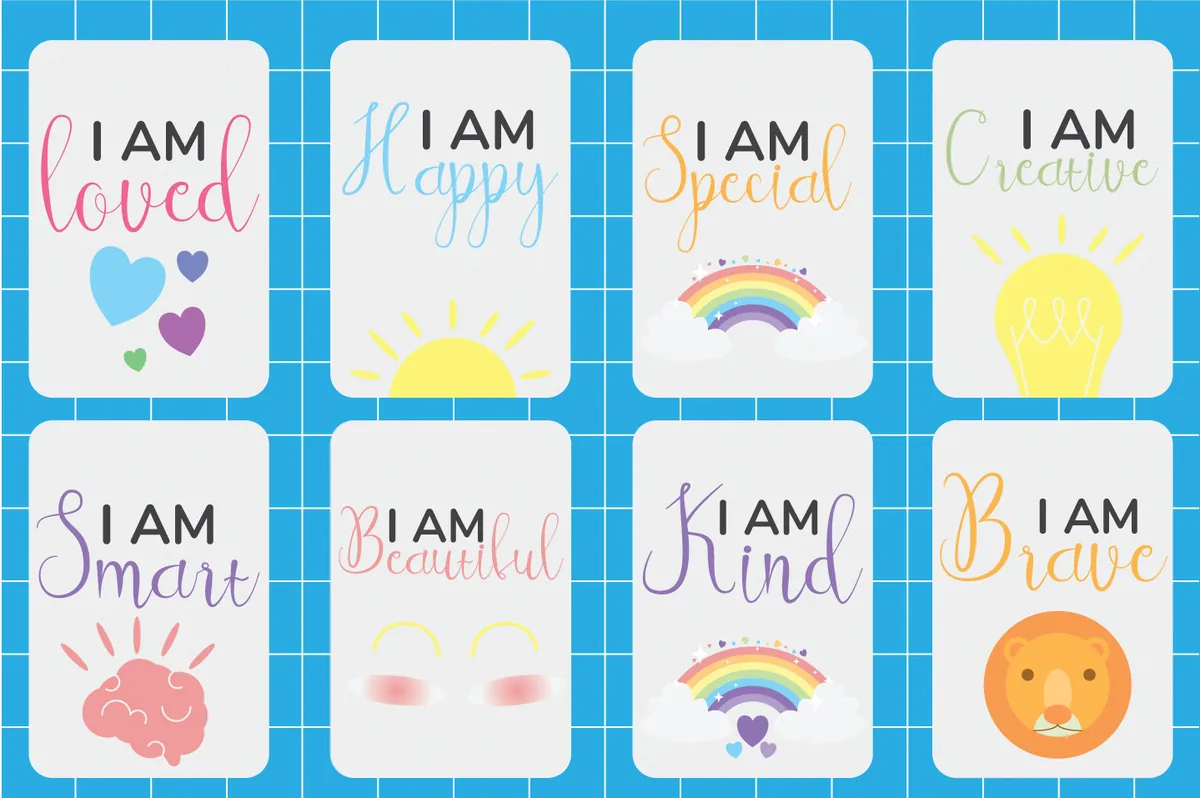 Best for preschool and early grades
- PDF + JPEG
- 4 x 6 in cards
- Not editable
What’s inside8 affirmation cards at 4 x 6 in, two per 8.5 x 11 in sheet, plus a self-portrait coloring page at 8.5 x 11 in; PDF and JPEG, 300 dpi, not editable. The cover shows cards that read “I am loved”, “I am happy”, “I am brave” and “I am kind”.
- 8 “I am” cards
- Self-portrait page
- 2 cards per sheet
- Cardstock tip
Why I picked it
Short “I am” words and simple pictures are easy for a young child to read and choose. The self-portrait coloring page makes a natural center for the board.
Keep in mind: there are only 8 cards, and the words can’t be edited.
04 / Best for tweens
Self-Esteem & Confidence Cards for Kids
Designed by Youssef Artist.
 Best for ages 8 to 12
- PDF + JPG
- 5 x 7 in
- Animal art
What’s insideSelf-esteem and confidence affirmation cards for ages 8 to 12 at 5 x 7 in, PDF and JPG. The listing describes 40 kid-friendly affirmations; the cover shows soft animal cards such as “I believe in myself always”.
- Ages 8 to 12
- 5 x 7 in cards
- Animal illustrations
- Confidence theme
Why I picked it
Older kids often want words that sound less babyish, and these confidence lines suit a tween’s board. The 5 x 7 size is big enough to read from across the room.
Keep in mind: the listing says 40 cards while the cover says 50.
05 / Best coloring
Affirmation Coloring Pages for Kids
Designed by olamiyoshi.
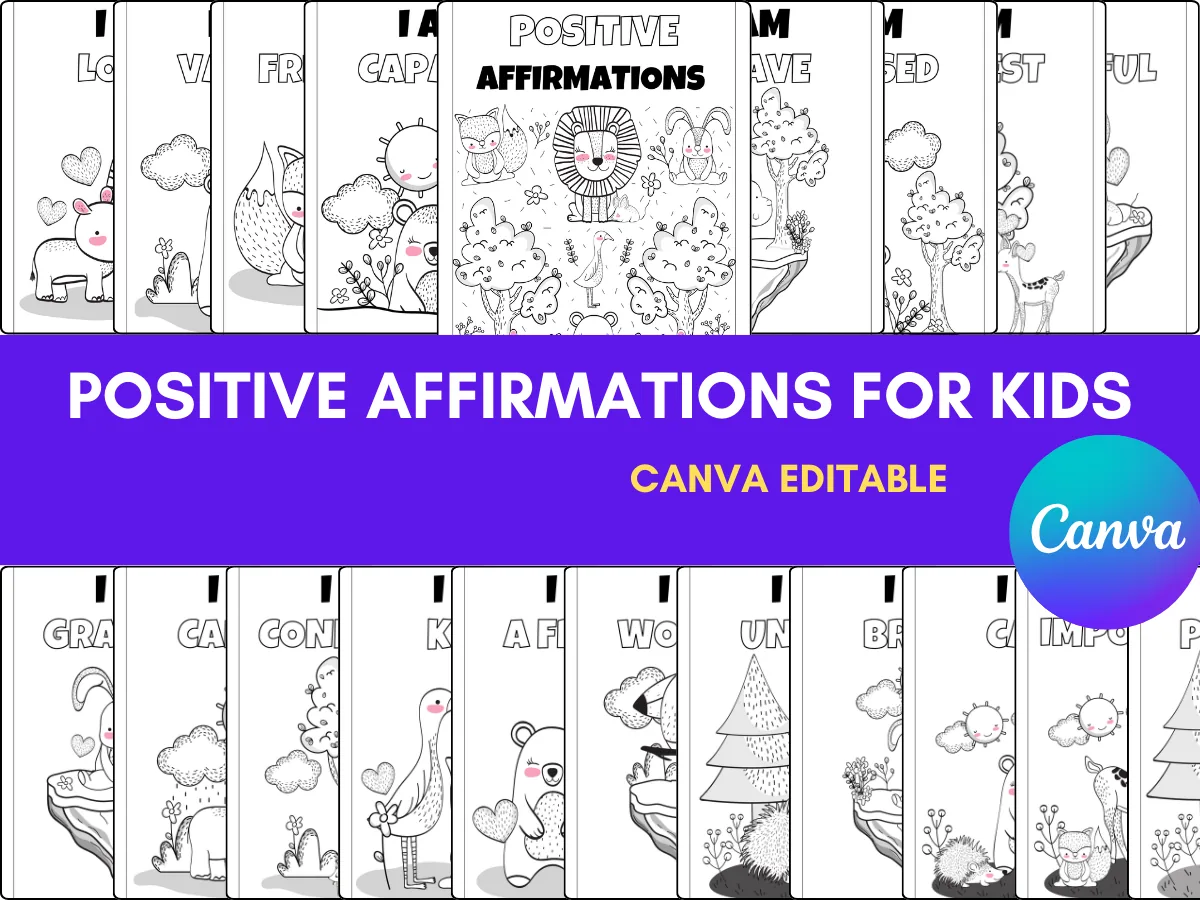 Best for kids who love to color
- PDF + PNG
- 23 pages
- Canva editable
What’s inside23 coloring pages for kids, each with an illustration and an affirmation, in themes from nature and animals to space and adventure. PDF and PNG files, also editable in Canva; the listing suggests using them on a vision board.
- 23 coloring pages
- One affirmation each
- Space + animal themes
- Editable in Canva
Why I picked it
Coloring the words makes them the child’s own before they go on the board. It’s also the quietest way to spend the first half hour of a vision board afternoon.
Keep in mind: the listing doesn’t state the page size.
06 / Best value
Printable Kids Positive Affirmation Card
Designed by printable.
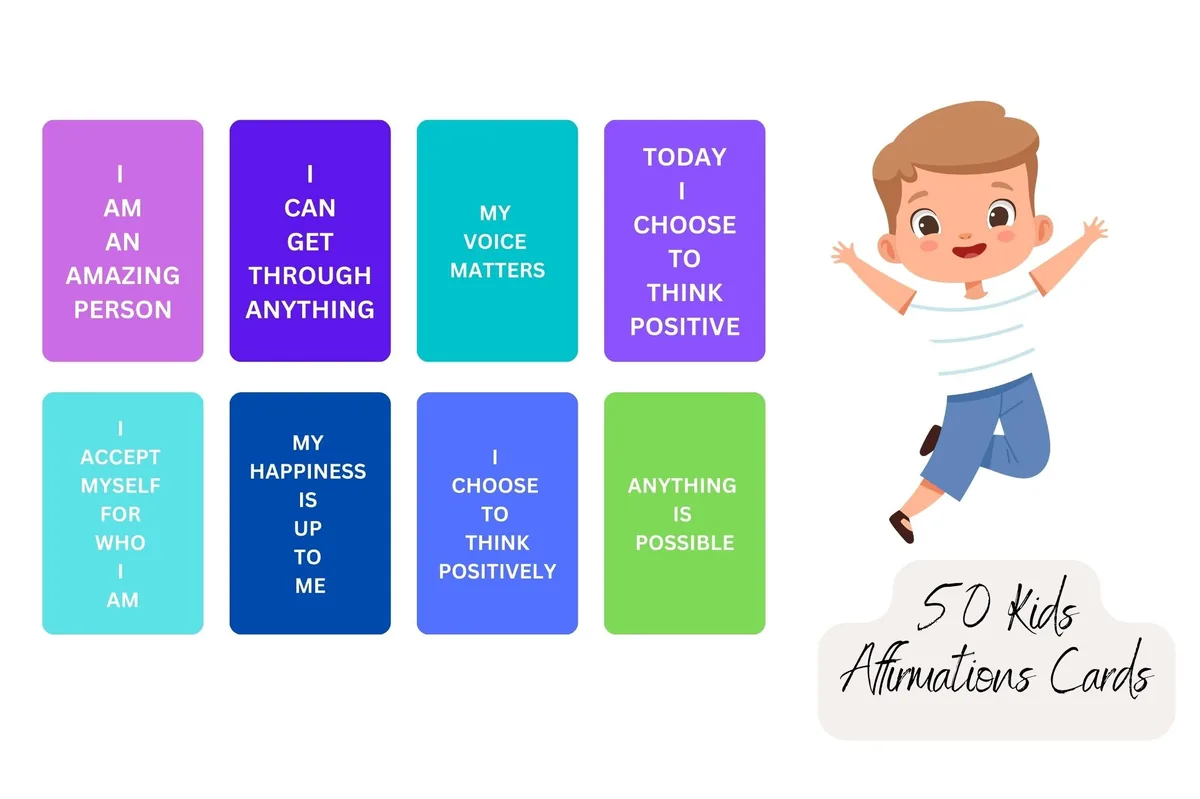 Best for lots of words
- PNG, JPG, PDF
- A4
- 50 cards
What’s inside50 colorful printable affirmation cards for kids in A4, as PNG, JPG and PDF. The cover shows bold color blocks with lines such as “I am an amazing person”, “My voice matters” and “Anything is possible”.
- 50 cards
- Bright color blocks
- Short sentences
- A4 sheets
Why I picked it
Fifty cards give a child plenty to choose from, which matters more than design when they’re picking words for their own board. The bright blocks stand out on a corkboard.
Keep in mind: it’s A4 only, and the plain color blocks have no pictures.
Quick Comparison
| Printable | Type | Ages listed | Sizes/format | Standout |
|---|---|---|---|---|
| 1. Vision Board Workbook | Workbook, 30 pages | 6 to 12 | 6 x 9 in, PDF | Themed mini boards |
| 2. Junior Dream Builder | Workbook, 40 pages | 6 to 10 (cover) | 8.5 x 11 in, PDF | Goal trackers |
| 3. Kids Zone cards | 8 cards + coloring page | Not stated | 4 x 6 in, PDF, JPEG | Self-portrait page |
| 4. Self-Esteem Cards | Affirmation cards | 8 to 12 | 5 x 7 in, PDF, JPG | Tween-friendly |
| 5. Coloring Pages | 23 coloring pages | Not stated | PDF, PNG, Canva | Color the words |
| 6. 50 Affirmation Cards | 50 cards | Not stated | A4, PNG, JPG, PDF | Most words |
Keeping the Board Alive
The craft afternoon is the easy part. Once a month, sit down for five minutes and ask which dream moved a little. Add a sticker or a check next to it, and swap out anything your child has lost interest in; boards are allowed to change.
If a dream has a number in it (books read, money saved, laps swum), a ten-box bar from our goal tracker printables sits nicely beside the board. For daily habits, a reward chart for kids is simpler. And if your child likes writing, our journal prompts for kids make a good follow-up to the board.
Planning a group version for cousins or a classroom? Our vision board party ideas cover the setup and snacks.
A little help
Frequently asked questions
A few answers before you print.
How do you make a vision board for kids?
Start by talking: ask what they’d like to learn, try, visit and be brave about. Pick three to six dreams, find a picture and a short word for each, glue them on a board and hang it where your child will see it every day. Add one small step next to one dream.
Kids vision board: Talk first, then glue Pictures + short words Hang it where they see it
What do you put on a kid’s vision board?
Pictures of things they want to learn, places to visit, books to read, people they love and kind things to do, plus a few “I am” or “I can” words. A drawing or photo of your child in the middle makes it feel like theirs.
What are good vision board ideas for boys?
The same as for any child: ask, don’t assume. Common picks are a sport or team, a skill like building or coding, a place to explore, a book series and a brave challenge, but a boy who loves baking or dance should see that on his board too.
Can preschoolers make a vision board?
Yes, with help. Keep it to a few big pictures and one-word ideas, let them do the gluing, and talk about each picture as it goes on. Short “I am” cards and a self-portrait page suit this age better than a workbook.
What size should a kids vision board be?
A letter-size sheet (8.5 x 11 in) is enough for a small child and fits on the fridge. Older kids may want a poster board or corkboard so they can add and swap pictures over the year.
Where should kids put their vision board?
Somewhere they’ll see it every day: the bedroom door, above the desk or on the fridge. Keeping it visible is what turns it from a craft into a reminder.
Final Thoughts
For a winter break afternoon, I’d print the Mahira Pro workbook’s “My Big Dreams” and “Places I Want to Visit” pages for an older child, or the Kids Zone “I am” cards and self-portrait page for a little one. Ask the questions first, keep it to a handful of dreams and hang it somewhere obvious. Then check in once a month and let the board grow with them.