Our family budget used to live in my head and on the back of grocery receipts. I knew roughly what came in and roughly what went out, and every month something surprised me: my son’s school trip, the car registration, a subscription I’d forgotten about. The fix wasn’t a stricter budget. It was a planner where I could actually see the money, one page at a time, on a Sunday afternoon with a cup of tea and my knitting waiting.
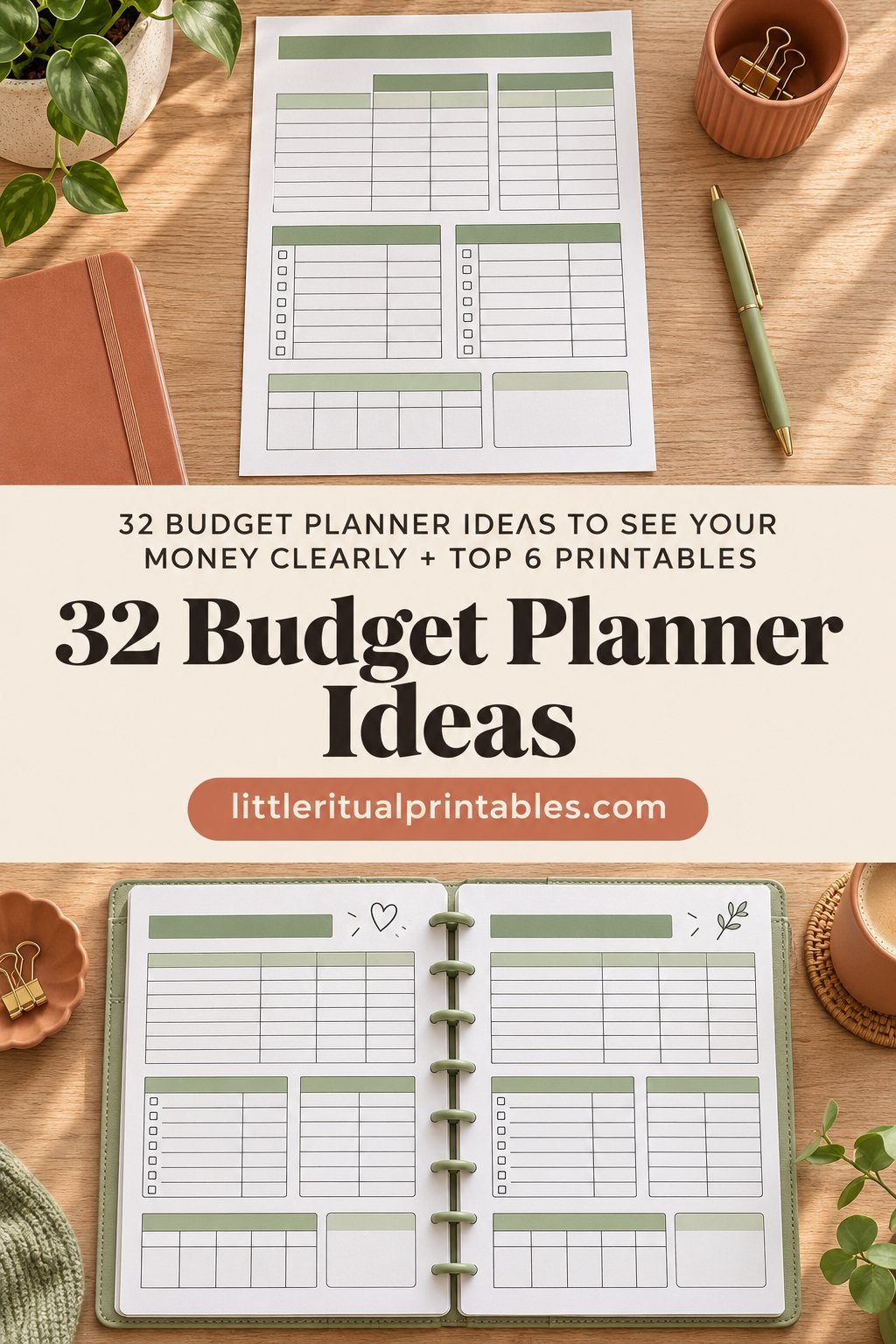
Here are 32 budget planner ideas I’ve collected: pages to add, budgeting methods to try on paper, saving and debt ideas, and small money habits, plus a 30-minute setup. I also looked for printables that already have the pages I use, and this is the one I found first. It stood out because it puts budget vs actual for income, bills, expenses, savings and debts on one page, with a leftover total, in four sizes.
01 / Best overall
Smart Monthly Budget Planner Printable
Designed by SpreadsheetsHub.
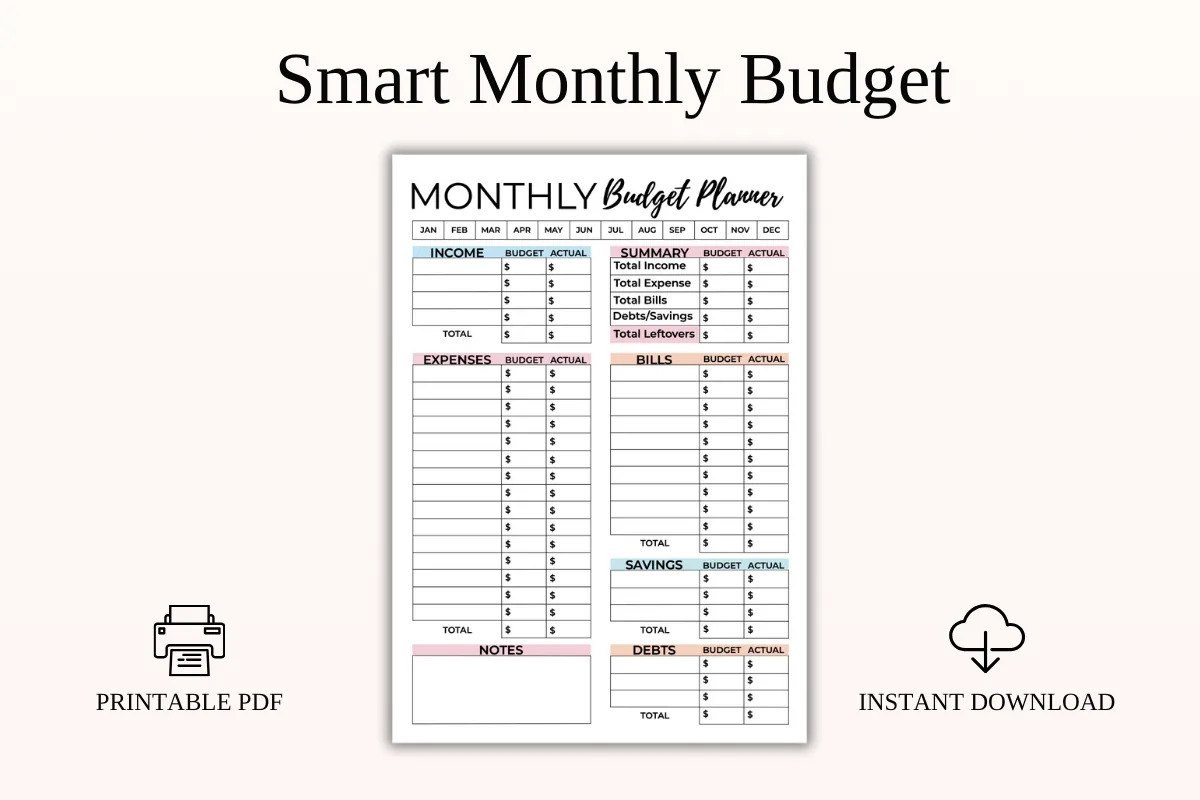 Best for budget vs actual
- A4, A5, Letter, Half
- 1 page
What’s insideA monthly budget page that compares budget vs actual for income, expenses, bills, savings and debts in separate sections, with a yearly month selector, a summary of total income, expenses, bills, savings and debts and leftovers, and a notes area; 4 sizes: A4, A5, US Letter and Half Letter.
- Budget vs actual
- Bills and debts
- Leftover total
- 4 sizes
Why I picked it
Budget vs actual on one page is the single most useful budget idea, and this sheet does it for every money category.
Keep in mind: it’s a dense page, so small handwriting helps.
One monthly page isn’t enough for every budget, though. Some people budget to zero, some use cash envelopes, and some need a weekly check or a list of subscriptions. So I kept looking, and my five other finds are further down. For a full top 10 of budget pages, see our budget planner printables roundup. This post is general information, not financial advice.
Budget Planner Page Ideas
These are the pages I’d put in a budget binder, in the order I’d fill them in.
- Money snapshot. One page with income, total bills, savings and debts. It’s the page you look at first every month.
- Income list. Every paycheck and side income with dates. Variable income? Use your lowest month as the base.
- Fixed bills by due date. Rent, utilities, phone and insurance in date order, so you see which paycheck covers which bill. Our monthly bill tracker printable has a full page for this.
- Category list. Not sure where to start? US households spent the most on housing (33.9% of spending), transportation (16.5%) and food (13.0%) in the latest Bureau of Labor Statistics survey. Start with those three.
- Budget vs actual. Two columns per category: what you planned and what you spent. The difference column is where the lessons are.
- Daily spending log. Write every purchase for one month before you set limits. Our expense tracker printable post explains how.
- Subscription list with renewal dates and a “keep or cancel” column.
- Irregular expenses page: car registration, birthdays, school fees, holidays. Divide each yearly cost by 12.
- Grocery budget page with a weekly limit and the running total.
- Year-at-a-glance page: twelve boxes for income, spending and savings, filled in on the last day of each month.
Budgeting Method Ideas
There’s no study that crowns one method, so pick the one that fits how you think about money. Each one turns into a page.
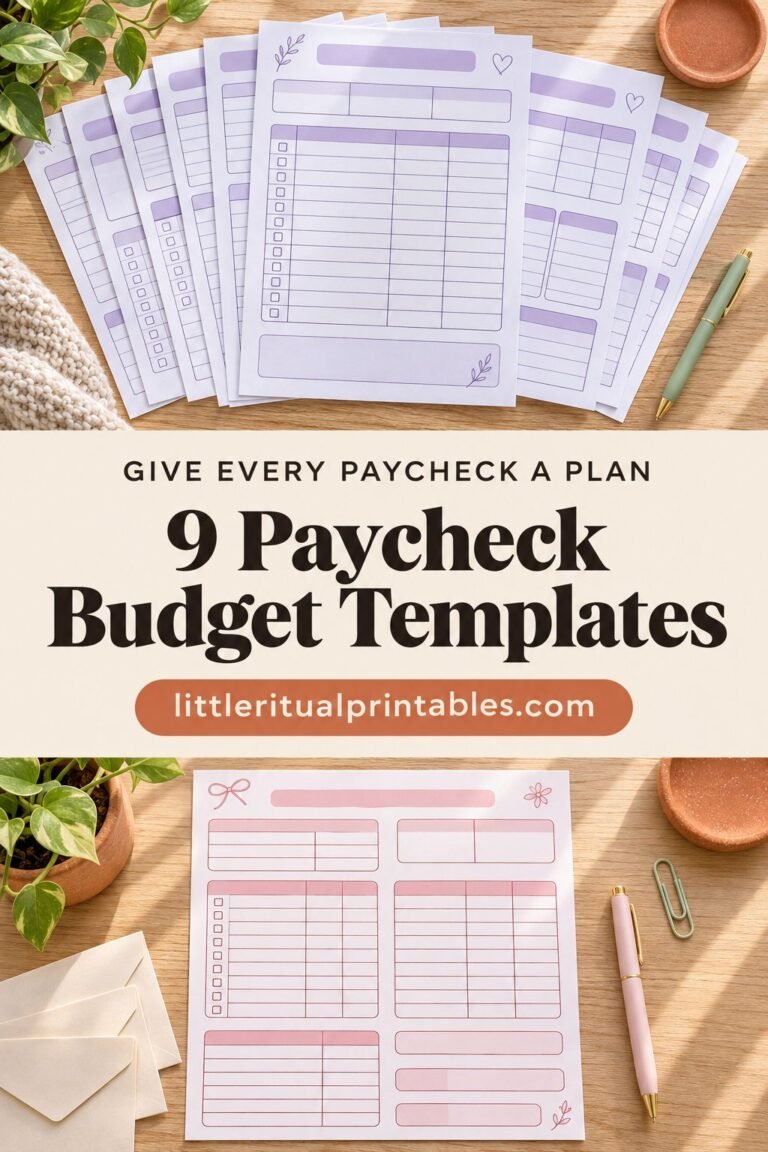
- 50/30/20 page. Split after-tax income into 50% for needs, 30% for wants and 20% for savings and debt. The split comes from Elizabeth Warren and Amelia Warren Tyagi’s 2005 book All Your Worth. Our paycheck budget template post has a worked example.
- Zero-based line. Income minus expenses equals zero every month: every dollar gets a job, savings included. Add a “left to assign” line at the bottom of the page.
- Cash envelopes. Cash for problem categories like groceries, eating out and fun money goes into labeled envelopes; when one is empty, that category is done for the month.
- Pay yourself first. Write savings as the first “bill” at the top of the page, before groceries or fun.
- Values-based budget. List three things you care about most, then check that your categories match them.
- Paycheck-by-paycheck page for biweekly pay: one column per paycheck with the bills it covers.
- Couples page: shared bills in one column, each person’s personal money in two others.
Saving and Debt Ideas
Savings goals feel more real on paper. In the Federal Reserve’s 2025 survey, 63% of adults said they would cover a $400 emergency expense with cash or its equivalent, and 55% had three months of expenses set aside in an emergency fund.
- Emergency fund milestones: $400, $500, one month of expenses, three months. Color in each step.
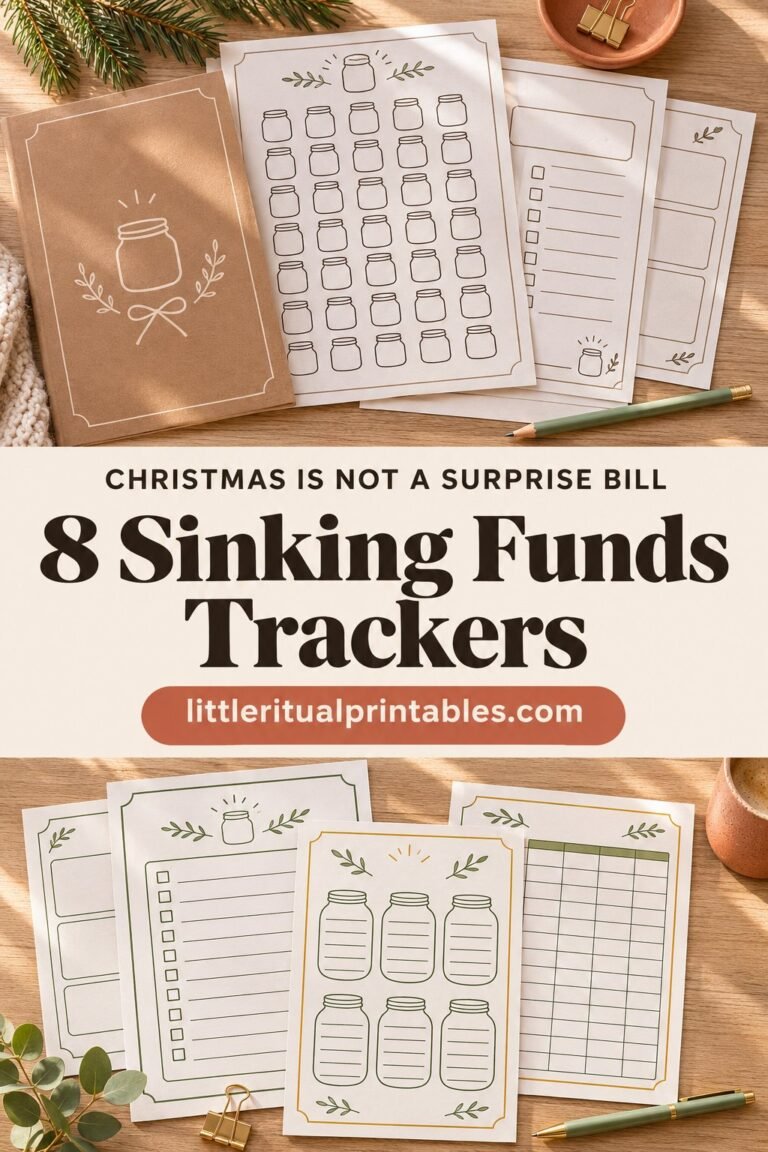
- Sinking funds page for known costs that don’t come monthly. Our sinking funds tracker post lists common categories.
- Savings thermometer for one big goal.
- Debt list with balances, minimum payments and due dates. The debt payoff tracker printable post compares snowball and avalanche.
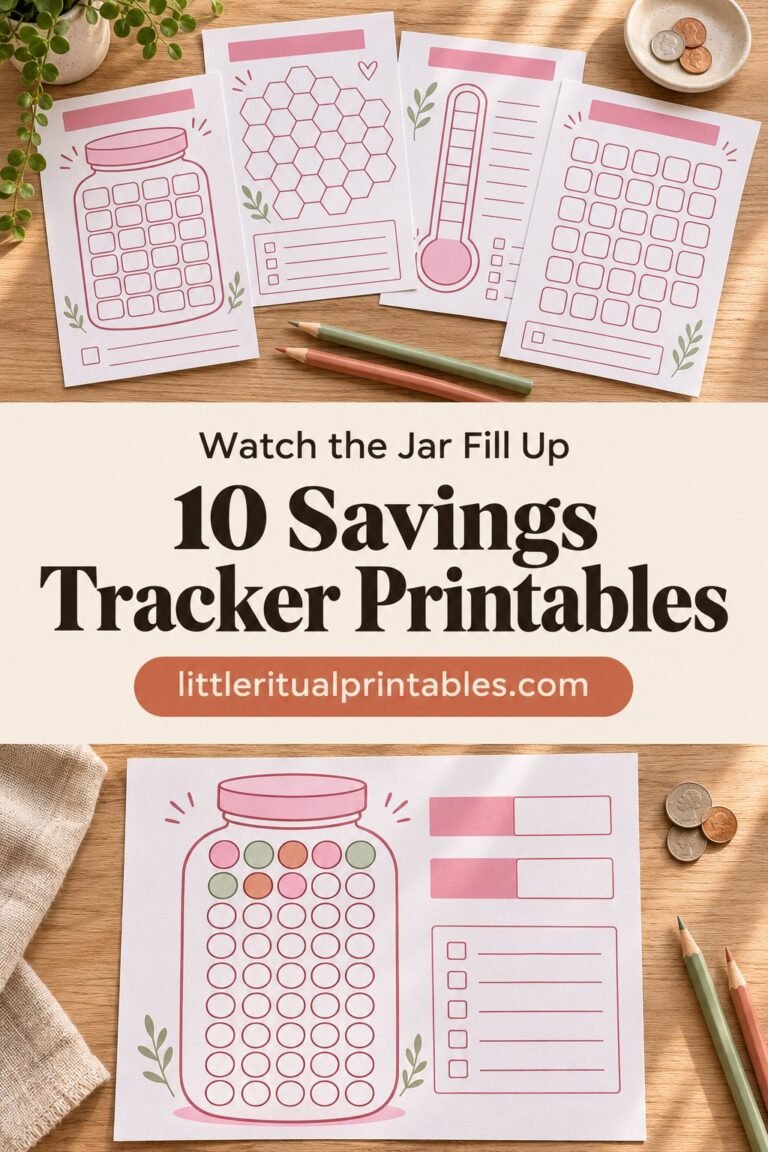
- Savings challenge chart for small wins; our savings tracker printable post has charts to color in.
- “Found money” line for refunds, gifts and cash back, so they go to a goal instead of disappearing.
- Low-income version: start with a $5 or $10 weekly goal; our low income savings challenges have ideas.
Money Habit Ideas
A budget only works if you look at it. These small habits keep the planner open.
- Weekly money date. Ten or fifteen minutes on the same day each week to log spending and check categories. University financial wellness centers suggest a money date once or twice a month, and some people prefer weekly.
- Monthly plan vs actual review on the last day of the month.
- Colored dot when a bill is paid.
- A no-spend week once a month; our no-spend challenge printable has rules and charts.
- Receipt envelope taped inside the binder cover for the week’s receipts.
- Fun money as a real category, so the budget doesn’t feel like punishment.
- ADHD-friendly version: fewer categories, bright colors, and one sticky note with this week’s spending limit on your wallet.
- Celebrate a good month with something small that fits in the fun category.
Set Up Your Budget Planner in 30 Minutes
I do this on the first weekend of the month, with last month’s bank statement open.
- List your income for the month and when each payment arrives.
- Write fixed bills in due-date order.
- Pick five to eight categories for everything else, starting with groceries, gas and eating out.
- Choose a method: 50/30/20, zero-based or envelopes, and fill in the amounts.
- Put savings at the top as the first payment.
- Add irregular costs divided by 12.
- Book your money date in your calendar for the same day every week.
The 6 Best Budget Planner Printables
I skipped KDP interiors with 100-plus pages, Canva-only templates, PLR bundles, 6 x 9 inch book pages, holiday and wedding budgets, and the budget pages already in our budget planner printables roundup. I kept one product per designer.
In short: the SpreadsheetsHub page for budget vs actual, the Jennifer Magri Designs spread if you budget to zero, and the Dan Ste inserts for cash envelopes.

Find your favorite
Quick Picks
Choose a printable to jump to its review.
- 01Best overallSmart Monthly Budget Planner Printable
- 02Best zero-basedZero Budget Tracker Printable
- 03Best cash envelopesCash Envelope Inserts Printable
- 04Best weeklyWeekly Budget Planner Printable
- 05Best for subscriptionsSubscription Tracker – Printable & Digit
- 06Best simple logBudget Log,Spending Log
How I chose. In order of weight: a page that matches an idea above (budget vs actual, zero-based, envelopes, weekly check, subscriptions); clear columns with room to write numbers; stated sizes; reusable undated pages; and an ink-friendly look. Everything below comes from each product’s page on Creative Fabrica, checked on November 24, 2026. I haven’t printed these myself, so I describe what each designer lists and shows.
02 / Best zero-based
Zero Budget Tracker Printable
Designed by Jennifer Magri Designs.
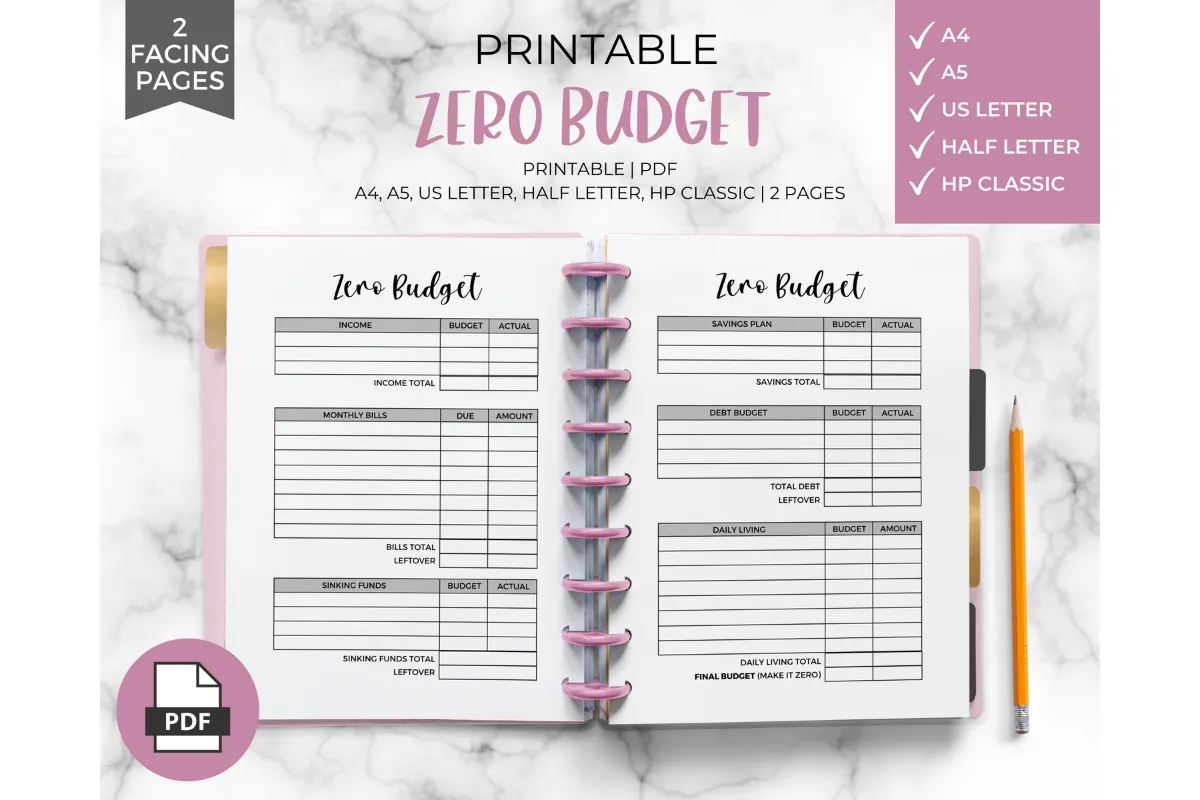 Best for giving every dollar a job
- 5 sizes
- 2 facing pages
What’s inside2 facing zero-based budget vertical inserts, each in 5 sizes: A4, A5, US Letter, Half Letter and Happy Planner Classic; PDF files where the background, text and elements can’t be changed.
- Zero-based
- 2 facing pages
- 5 sizes
- Happy Planner size
Why I picked it
Two facing pages give a zero-based budget the room it needs, and the Happy Planner size is rare.
Keep in mind: it isn’t editable, so the section names are the designer’s.
03 / Best cash envelopes
Cash Envelope Inserts Printable
Designed by Dan Ste.
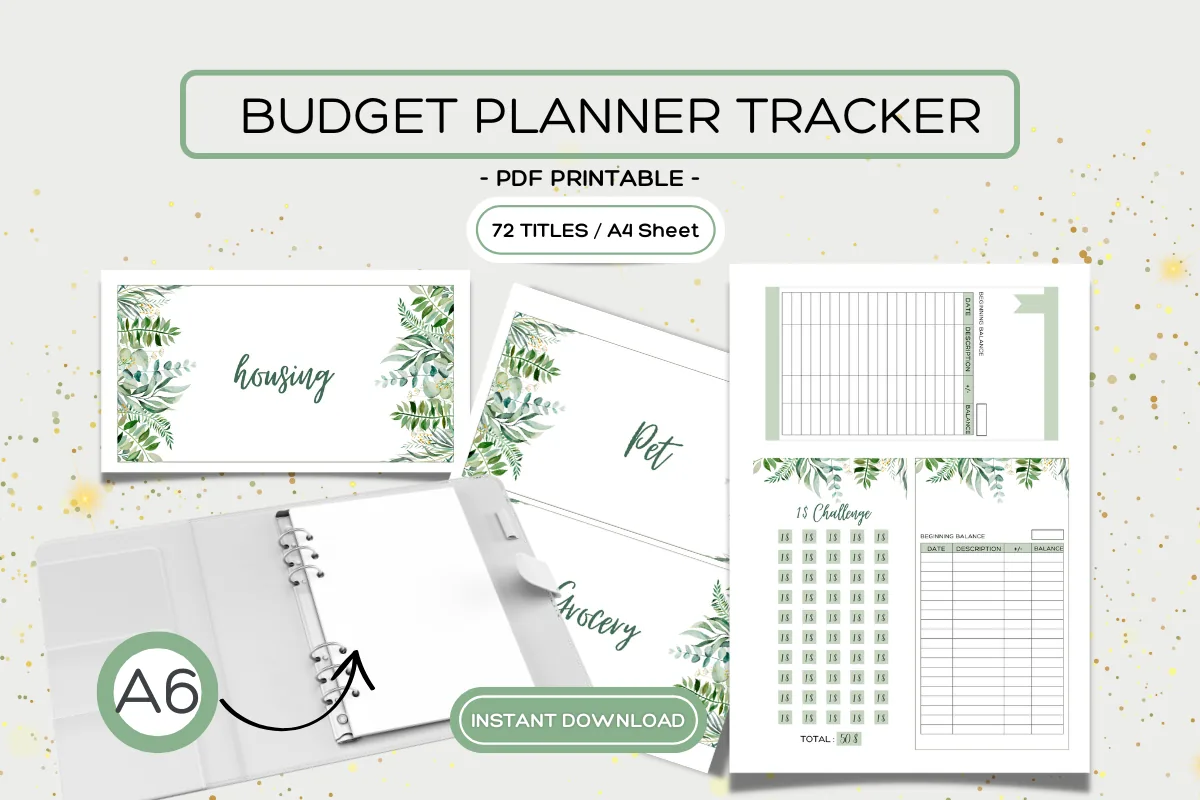 Best for cash stuffing
- Printable
- A6 binder
- 70 templates
What’s inside70 cash envelope templates in different categories to log deposits and withdrawals, a matching income tracker and a bonus fill-in-the-blanks challenge template, made to fit a zipper envelope of an A6 budget binder; the cover says the titles come on A4 sheets.
- 70 categories
- Income tracker
- DIY challenge
- A6 fit
Why I picked it
Seventy ready-made categories cover nearly every envelope you’d want, from groceries to pets.
Keep in mind: the listing doesn’t name the file format, and you’ll need an A6 binder and zipper envelopes.
04 / Best weekly
Weekly Budget Planner Printable
Designed by SteadyPlanSheets.
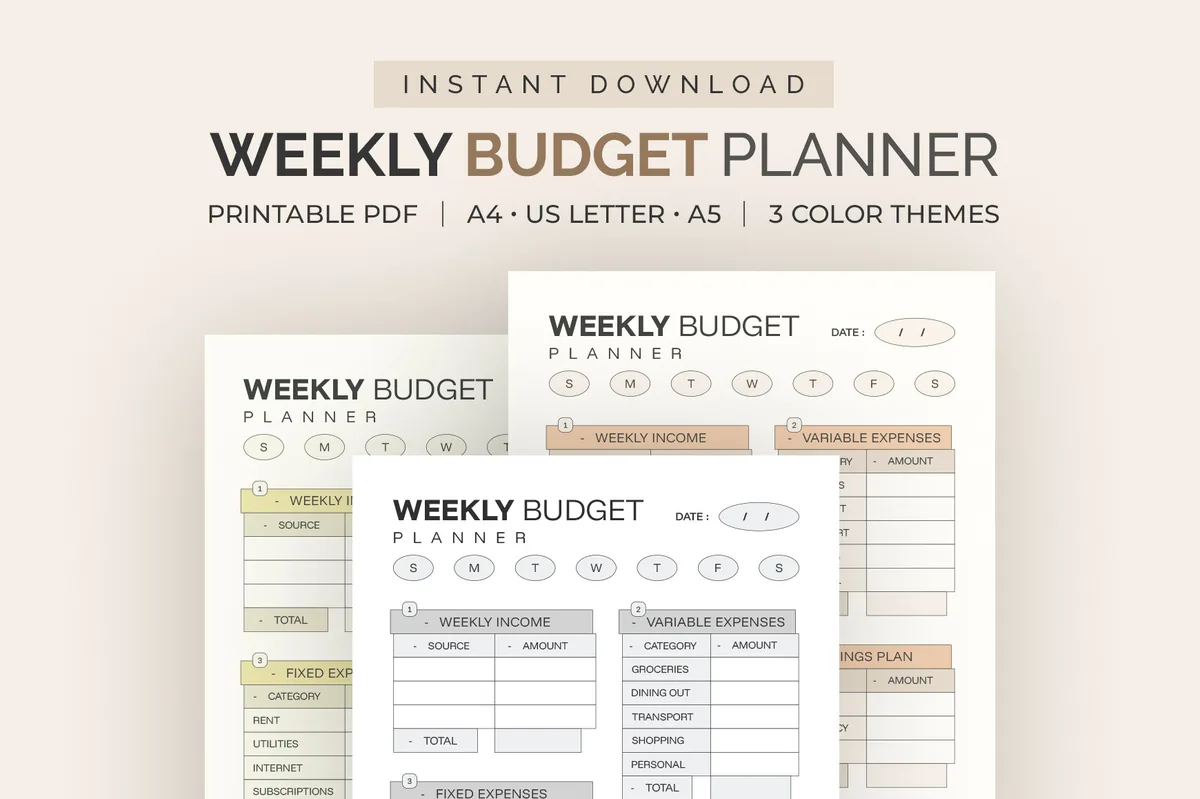 Best for a weekly money date
- A4, Letter, A5
- 3 colors
What’s inside9 printable PDF files in 3 color variations and A4, US Letter and A5 sizes, with sections for weekly income, fixed expenses, variable expenses, a spending tracker, a savings plan, a weekly summary and notes.
- Weekly income
- Spending tracker
- Savings plan
- 9 PDFs
Why I picked it
A one-page weekly check is the easiest way to catch overspending before the month is gone.
Keep in mind: a page a week adds up to 52 pages a year.
05 / Best for subscriptions
Subscription Tracker – Printable & Digit
Designed by Plamarplanners.
 Best for cutting recurring costs
- A4 + Letter
- Print or tablet
What’s insideA subscription tracker as an A4 and US Letter PDF plus a digital version for GoodNotes or Notability, with a monthly subscription log, an annual subscription overview, service details (name, start date, frequency, amount), payment method and renewal date, cancellation notes and priority and category sorting.
- Renewal dates
- Annual overview
- Cancellation notes
- A4 + Letter
Why I picked it
A list of every subscription with its renewal date is the quickest money win in this post.
Keep in mind: it covers one job only, so you’ll still need a main budget page.
06 / Best simple log
Budget Log,Spending Log
Designed by watercolortheme.
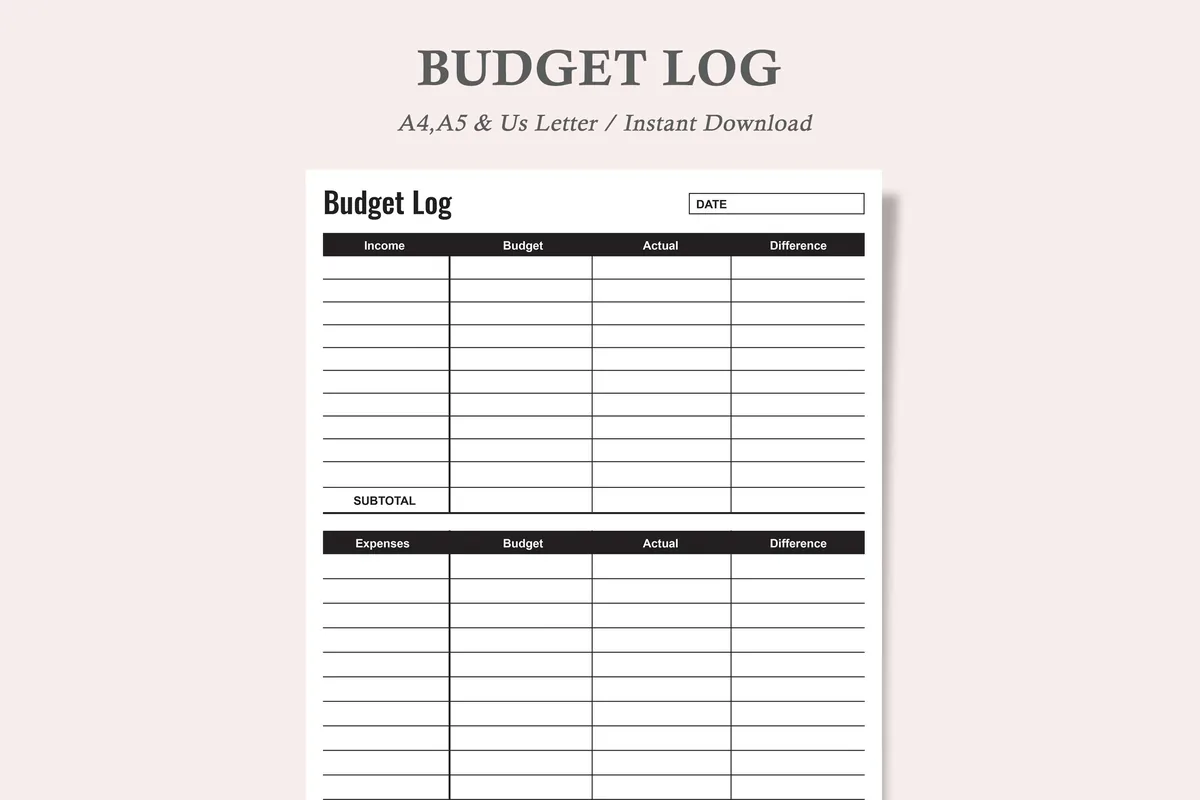 Best for ink-light printing
- PDF + JPEG
- Letter, A4, A5
- Ink-friendly
What’s insideA budget log page as 3 PDFs and 3 JPEGs (US Letter, A4 and A5), one version in a minimalist, ink-friendly design; the cover shows income and expense tables with budget, actual and difference columns.
- Budget, actual, difference
- Income + expenses
- 3 sizes
- Ink-friendly
Why I picked it
A plain log with a difference column is all a beginner needs to start, and it barely uses ink.
Keep in mind: it’s plain black and white, and the PDFs aren’t editable.
Quick Comparison
| Product | Method | What’s inside | Sizes/format | Standout |
|---|---|---|---|---|
| 1. Smart Monthly Budget | Budget vs actual | Income, bills, savings, debts | A4, A5, Letter, Half | Leftover total |
| 2. Zero Budget Tracker | Zero-based | 2 facing pages | 5 sizes, PDF | Happy Planner size |
| 3. Cash Envelope Inserts | Envelopes | 70 templates, income tracker | A6 binder | Most categories |
| 4. Weekly Budget Planner | Weekly check | Income, spending, savings plan | A4, Letter, A5 | 3 colors |
| 5. Subscription Tracker | Recurring costs | Log, annual overview | A4, Letter | Renewal dates |
| 6. Budget Log | Simple log | Budget, actual, difference | Letter, A4, A5 | Ink-friendly |
How to Print a Budget Planner
Print the setup pages once and the monthly pages twelve times, or keep one master copy in a sheet protector and write on it with a dry-erase marker. US Letter is 8.5 x 11 inches and A4 is 210 x 297 mm; print at actual size (100%) when the file matches your paper and choose “fit to page” for an A4 file on Letter. A6 envelope inserts need trimming, so a paper cutter saves time. Use regular printer paper for logs you’ll rewrite, and keep everything in a two-inch binder with tabs for setup, monthly pages and savings.
Money goals work best one month at a time; these monthly goals templates have room for the steps.
A little help
Frequently asked questions
A few answers before you print.
What is the 50/30/20 rule for budgeting?
It splits after-tax income into 50% for needs (housing, groceries, utilities), 30% for wants and 20% for savings and extra debt payments. It’s a starting point; adjust the split if your rent takes more than half.
Monthly budget: Income first Bills by due date Budget vs actual
How do I budget money as a beginner?
Track every purchase for one month, list your income and fixed bills, pick five to eight categories, and compare planned vs actual spending each week. Start simple and add pages later.
How do I budget on a low income?
Cover needs first, then set even a small weekly savings goal, like $5. Cash envelopes for groceries and a list of every subscription help find small amounts.
How do I budget my paycheck?
Assign each paycheck the bills due before the next one, then savings, then groceries and gas, then the rest. Our paycheck budget template post walks through it step by step.
How do I create a budget and stick with it?
Keep the budget where you’ll see it, book a weekly money date, include fun money, and change categories that don’t fit instead of giving up.
What are good budgeting tips for ADHD?
Use fewer categories, automate savings, put bill due dates in your phone, and do a short weekly check instead of one long monthly session.
Final Thoughts
The best budget planner ideas are the pages you’ll actually open every week. I’d start with the SpreadsheetsHub budget vs actual page and the Plamarplanners subscription tracker, then add envelopes if groceries keep running over. This weekend, list your income and bills, and book your first money date.